
A Rundown About Car Brakes: The Importance of Them, Which To Get, and How To Install Them
Facebook
Twitter
LinkedIn
The role of brakes is to slow or stop the vehicle, making them a crucial part of its safety. While car brakes are usually not used to their full extent, there are situations in traffic where their reliability stands out. Such situations are an indicator that drivers must take great care of the brakes. Driving the vehicle properly will save the brakes, but regular service and replacement of worn parts are also of great importance.
Ever since the cars were first invented in the late 1800s, and up until the mid-1900s, they had mechanical brakes installed. That solution proved unreliable because it consisted of many moving parts, susceptible to wear and tear. Since the 1950s, car brakes have been working on hydraulic principles, and this system is still widely used. Modern electric cars use brake-by-wire systems, with a position sensor sending signals when the brake pedal is pushed down.
Main Components of the Hydraulic Car Brakes
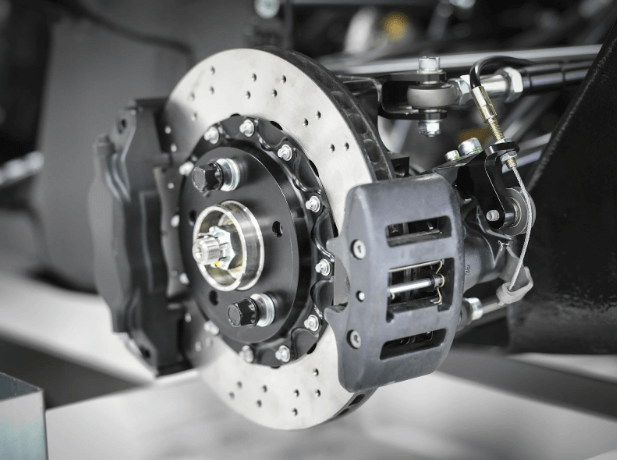
Most modern cars have built-in hydraulic brakes, meaning they operate on fluids to create pressure on brake calipers and, ultimately, the brake pads. Here are the car brake parts needed for the hydraulic brakes to work properly.
Brake Pads
Brake pads can be made of three different types of material:
Semi-metallic: A mixture of metal fibers with other materials. They are durable but produce more brake dust.
Ceramic: Provide excellent performance, with less noise and dust, while retaining durability.
Organic: Made of rubber, carbon, and Kevlar, they wear faster than the others.
Brake Rotors
They are also known as brake discs. Brake rotors work together with brake pads, converting kinetic energy into thermal and slowing the rotation. They are usually made of cast iron, but higher-performance vehicles can use composite rotors. The brake rotor design can be solid, vented, slotted, and drilled, with each having its advantages and disadvantages.
Brake Calipers
They come in floated or fixed designs. The floated calipers have pistons on one side of the rotor, and the fixed ones have pistons on both sides, applying even pressure to both.
Brake Lines
Brake lines can be made of metal or flexible rubber and must withstand pressure when the brakes are activated. Metal lines are usually made of steel or some other corrosion-resistant material, providing durability and stability. Rubber brake lines are designed to allow movement between the chassis and the wheels.
Brake Master Cylinder
There are two types of master cylinders:
- Single-circuit cylinders have one chamber for both front and rear brakes.
- Dual circuit master cylinders have a chamber for each brake, meaning that if one chamber breaks, the other can still compensate with reduced effectiveness.
Brake Fluid
The brake fluid is designed to be non-compressible and has a high boiling point to prevent vaporization. It also has to be compatible with the other parts used in the braking system.
How Do Car Brakes Work?
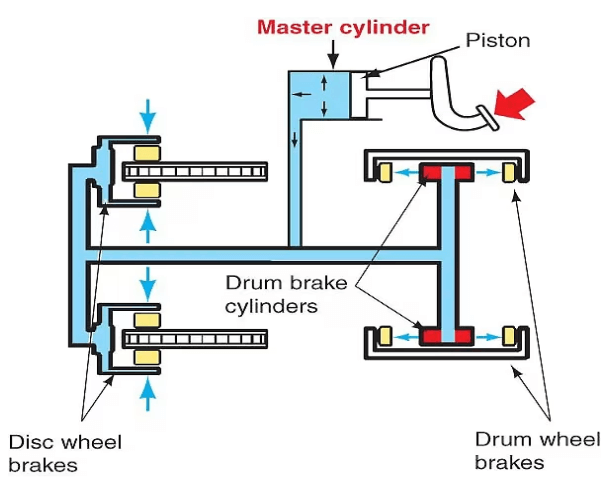
The disc car brakes have a relatively easy-to-understand mechanism. Once the brake pedal is pressed, the whole system starts. The brake calipers are mounted near the wheels, and hydraulic pressure is transmitted to them by the brake lines. The pressure causes the caliper’s pistons to extend, pressing the brake pads against the brake rotor.
Once the pads make contact with the rotor, they generate friction, which converts the kinetic energy of the spinning rotor into heat. The friction causes the rotor’s spinning to decelerate, causing the vehicle’s wheels to slow down.
Anti-Lock Brakes (ABS): Modern Solution for Safer Driving
ABS are advanced features in modern vehicles and extremely useful in avoiding a crash. They are designed to prevent the wheels from locking up during braking, maintaining steering control, and reducing stopping distances. ABS is extremely reliable in wet and slippery conditions. Anti-lock brakes work based on the following parts and principles:
- Sensors. ABS sensors are normally located at the wheels, monitoring their speed of rotation. They are important because they detect when the wheel is about to lock up.
- Controller. The sensors send information to the controller, which continuously monitors the speed of each wheel.
- Hydraulic pump. It is activated when the controller detects when the wheel is about to lock up. The hydraulic pump applies and releases the brake pressure of the wheel through solenoid valves, which prevents the wheel from totally stopping.
- Pulsating brake pedal and steering control. When the ABS engages, it helps the driver maintain control of the steering wheel while the brake pedal is pulsating or vibrating. It is a sign that the anti-lock brake feature actively adjusts the brake pressure on the wheel to stop it from locking up.
ABS is an integral part of modern safety systems and is activating automatically. It is crucial that drivers still maintain maximum safety levels and proper braking techniques to avoid accidents, even in ABS-equipped vehicles.
How To Choose the Right Brake Pads
Choosing the right brake car parts is significant for ensuring the safety, performance, and longevity of the whole braking system. There are no perfect brake pads, and many factors come into the equation when choosing the right brake pad, such as driving style, compatibility with the vehicle and the rotor, and, of course, the budget.
A Plus Auto Parts has an offer that includes the best options on the market, providing exceptional value for your money.
How To Install Car Brakes
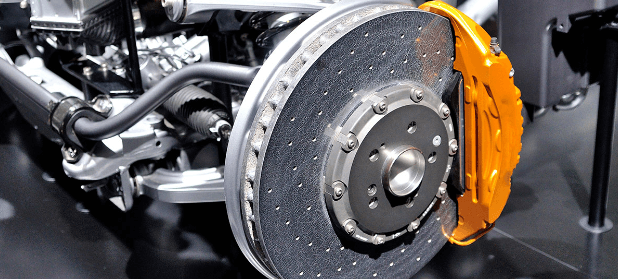
Changing car brake parts such as brake pads or rotors may sound complicated, but it is pretty straightforward. Here is a simple guide on how to do it on your own:
- Order brake pads and rotors from A Plus Auto
- Park the vehicle on a flat surface and install wheel chocks
- Remove the wheel while raising the vehicle first
- Remove the brake caliper
- Remove the old pads and rotor
- Inspect the old pads for uneven wearing
- Clean the surface and the new rotor
- Install the new rotor
- Install brake hardware and the new pads
- Inspect and install the caliper
- Check the brake fluid reservoir
- Pump the brakes to see if the system is working properly
- Install the wheel
After you have completed all these steps, lower the vehicle and repeat on the remaining wheels that need new brake pads and rotors.
Trust A Plus Auto for Your Brake Needs
Brakes are a critical safety feature, and knowing how to choose, install, and maintain them can make all the difference in your driving experience. At A Plus Auto, we are here to help you with every step, from selecting the right brake parts to guiding you through installation. We offer a wide range of high-quality brake components designed to meet your specific needs and enhance your vehicle’s performance. Remember, proper brake maintenance is not just a part of vehicle upkeep; it’s a crucial investment in your vehicle’s longevity and your own safety. Trust A Plus Auto for all your brake needs and drive with confidence knowing you have the best parts stopping your wheels.
Facebook
Twitter
LinkedIn